



Surrogacy in Kansas
Kansas is widely considered a surrogacy-friendly state, with a supportive legal environment that helps provide strong protections and clarity for intended parents throughout the process. Working with a trusted surrogacy agency like Hatch helps ensure your Kansas journey feels guided, secure, and fully supported from the very beginning. Whether you live in Kansas or are hoping to match with a surrogate here from out of state, Hatch is here to walk you through every step — including screening, personalized matching, legal guidance, and clinic coordination. We support both intended parents and surrogates with experienced, compassionate care so everyone feels informed, prepared, and confident along the way.
Surrogacy Laws in Kansas
| Gestational surrogacy is generally permitted in Kansas. |
Kansas does not have a single dedicated surrogacy statute, but gestational surrogacy is commonly supported through well-drafted legal agreements and parentage procedures handled in the courts. This means women living in Kansas can pursue becoming a surrogate, and intended parents in the state can legally grow their families through surrogacy. Kansas is generally supportive of assisted reproduction, including gestational surrogacy, egg donation, sperm donation, and embryo donation. For intended parents exploring family-building options, Kansas can be a strong and trusted place to pursue surrogacy with the right legal guidance.
Inclusivity
The state is also a welcoming option for many modern families, including single parents by choice and LGBTQ+ intended parents. With experienced legal support, many families are able to move forward with confidence and clarity.
Requirements
In Kansas, it is important for intended parents and surrogates to have separate legal counsel and a clear written surrogacy agreement in place before the journey begins, and pre-birth orders may also be available depending on the court. At Hatch, we’re here to walk you through every step and can connect you with experienced reproductive attorneys to help protect everyone involved and keep the process as smooth as possible.
Kansas Surrogacy Requirements
At Hatch, our surrogacy requirements are designed to protect your health, support a positive pregnancy, and create the strongest possible foundation for a successful journey. If you’re considering becoming a surrogate in Kansas, we’re here to walk you through each requirement with care, clarity, and expert guidance.
How Hatch Works
At Hatch, we bring intended parents and compassionate surrogates together, guiding every step of the surrogacy journey with care and expertise. As a leading third-party surrogacy agency, we handle every detail—from matching and legal support to medical coordination—so you can focus on what matters most: building your family.

Benefits of Working with Hatch
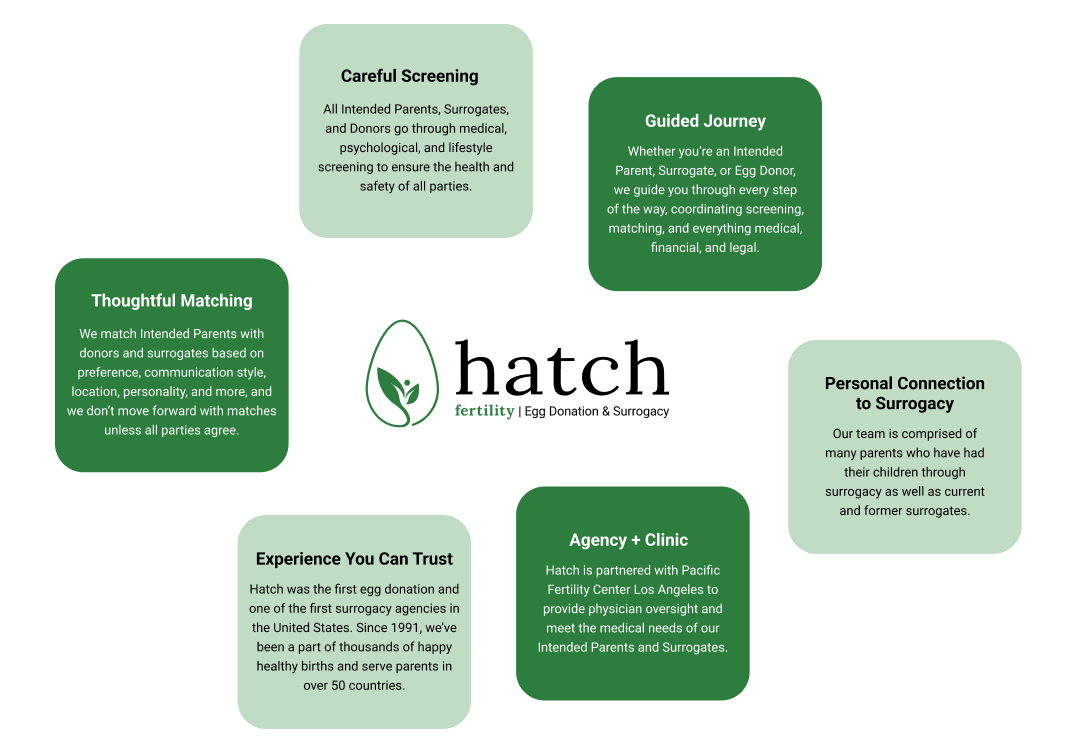
Experience You Can Trust
Hatch was the first egg donation and one of the first surrogacy agencies in the United States. Since 1991, we’ve been a part of thousands of happy healthy births and serve parents in over 50 countries.
Agency + Clinic
Hatch is partnered with Pacific Fertility Center Los Angeles to provide physician oversight and meet the medical needs of our Intended Parents and Surrogates.
Personal Connection to Surrogacy
Our team is comprised of many parents who have had their children through surrogacy as well as current and former surrogates.
Guided Journey
Whether you’re an Intended Parent, Surrogate, or Egg Donor, we guide you through every step of the way, coordinating screening, matching, and everything medical, financial, and legal.
Careful Screening
All Intended Parents, Surrogates, and Donors go through medical, psychological, and lifestyle screening to ensure the health and safety of all parties.
Thoughtful Matching
We match Intended Parents with donors and surrogates based on preference, communication style, location, personality, and more, and we don’t move forward with matches unless all parties agree.
Know someone who would make a great surrogate? Join our referral program.
Cities We Serve in Kansas
Hatch proudly supports intended parents and surrogates across the entire state of Kansas, so wherever you’re starting from, you’re in the right place.
We’re also proud to work with our trusted partner clinic, Pacific Fertility Center Los Angeles (PFCLA), a highly respected fertility center known for its exceptional care and expertise.
Intended parents are always welcome to choose any fertility clinic they prefer, and surrogates typically receive their OB care close to home, with all travel expenses covered by the intended parents.
To provide added peace of mind, Hatch offers the Peace of Mind™ Program — a unique all-inclusive surrogacy offering designed to make the journey feel more secure and supported. This program includes unlimited egg donations, embryo transfers, and surrogate matches, giving intended parents greater flexibility, security, and confidence as they plan for their family.
We proudly support families and surrogates in cities including:
- Wichita
- Overland Park
- Kansas City
- Olathe
- Topeka
- Lawrence
- Shawnee
- Manhattan
If you live in Kansas and don’t see your city listed above, don’t worry — Hatch proudly supports intended parents and surrogates throughout the entire state.
FAQs about Kansas Surrogacy
Yes, surrogacy is generally practiced in Kansas, and many intended parents and surrogates successfully complete journeys here. Kansas does not have a detailed surrogacy statute, so it’s especially important to work with experienced legal professionals who can guide you through contracts and parentage steps.
In general, surrogates in Kansas should be healthy adults who have already had at least one uncomplicated pregnancy and are raising a child of their own. They also need to meet medical, lifestyle, and psychological screening requirements to help ensure a safe and supported journey for everyone involved.
Kansas surrogacy can be an option for many types of intended parents, including heterosexual couples, same-sex couples, and single parents. The best path can vary depending on your circumstances, so having the right agency and legal team in place makes the process much smoother.
A surrogacy contract is a legal agreement between the surrogate and the intended parents that outlines expectations, responsibilities, compensation, and important medical and logistical details. In Kansas, these agreements should always be drafted and reviewed by separate experienced surrogacy attorneys before any medical procedures begin.
Parentage in Kansas is typically established through a legal process handled by your attorney, often before or shortly after birth depending on the case. Because Kansas does not have a one-size-fits-all surrogacy law, working with a knowledgeable local attorney is key to making sure parental rights are clearly protected.
Hatch provides guidance from the early planning stages through matching, coordination, and ongoing support during the pregnancy. You’re in the right place if you want an experienced team that combines compassionate care with trusted expertise throughout your Kansas surrogacy journey.

Take the Next Step in Your Kansas Surrogacy Journey
Becoming a surrogate in Kansas means joining a supportive community with strong legal protections and experienced guidance. At Hatch, we’re here to ensure you feel confident and cared for throughout every part of your surrogacy journey in Kansas.
Blog
Stay up-to-date and informed with resources on egg donation, surrogacy and parenthood.
Iowa continues to be a reassuring place for families pursuing surrogacy. If you are researching Iowa surrogacy laws, you can feel encouraged by the state’s generally supportive approach to gestational surrogacy, especially when the
Indiana surrogacy laws can feel uncertain when you are trying to build or help build a family. Unlike some states, Indiana does not have a clear, modern statute that fully outlines every part of the surrogacy process. Still,
If you are exploring Tennessee surrogacy laws, you likely want two things at once: clear legal answers and genuine peace of mind. That makes sense. Surrogacy is deeply personal, and in Tennessee, the legal landscape is workable but